Julia Laboratory use technologies, including organic synthesis, antibody design engineering, antibody preparation, siRNA, proteomics, genomics, metabolomics, bioinformatics, and big data analysis.
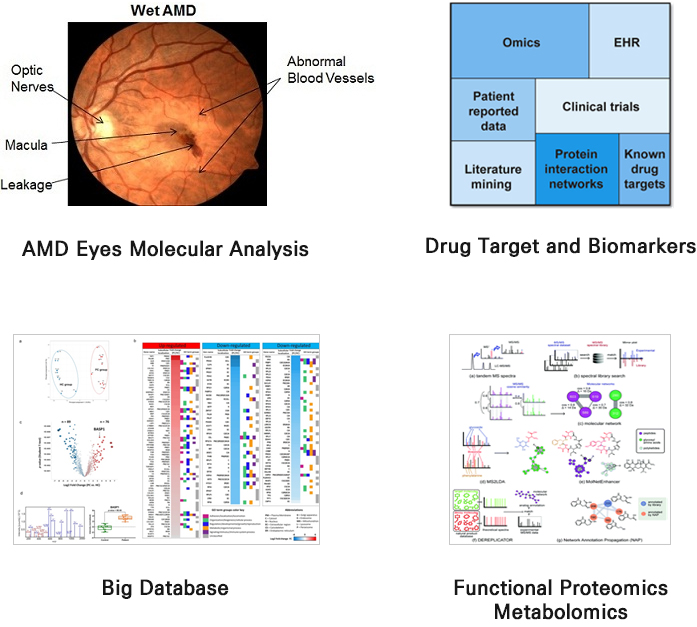
Research Techniques
Chemistry
organic synthesis, stable isotope (2H & 13C) and radioactive (3H & 14C) labeled synthesis, trained radioactive chemist (3H, 14C, 32P), NMR (1H, 13C, 19F, 31P, and 2D), mass spectrometry (MALDI-TOF-TOF, ESI-MS/MS), FTIR, GC/MS, HPLC (achiral, chiral, reverse phase), UV/VIS, physical organic chemistry techniques, organic reaction kinetics, amino acid chemistry, functional group protection, drug design/synthesis, plastic to gasoline; thermal catalytic cracking, biofuel production, bioethanol fermentation, solar cell, biobattery, conducting polymer
Biochemistry/Biology/Medicine
functional proteomics, 2-D Electrophoresis, mass analysis, post-translational modification, immunoblot, cell culture, immunocytochemistry, immunohistochemistry, database search, membrane protein biochemistry, chemical labeling, enzyme kinetics, protein cloning/expression/purification, biophysical techniques, general molecular biology, in vivo animal study (mouse, rat, zebrafish, chick embryo), metabolomics
Differentiated Competitiveness
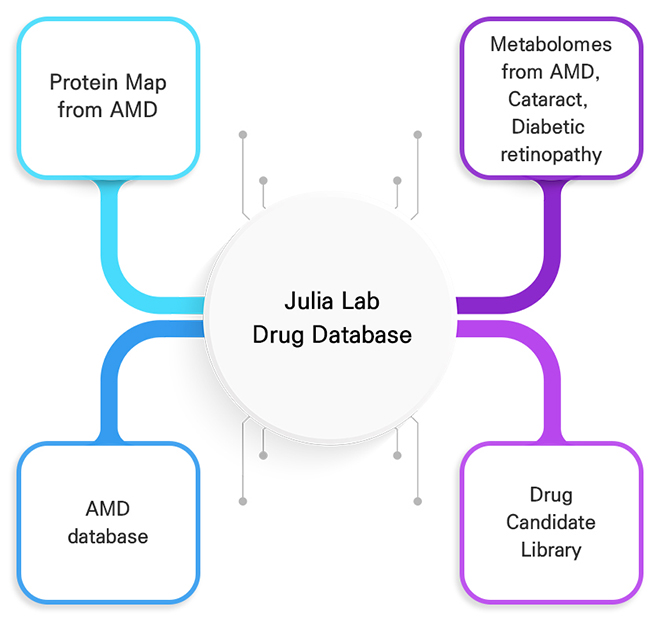
Julia Laboratory accumulated all data on proteome and metabolome on macular degeneration, cataract, diabetic retinopathy, and Alzheimer’s disease. These data include qualitative and quantitative analysis of proteomic and metabolomics data toward disease progression-related changes using tissue samples from patients.
Technology 1 A proteome library and big data related to apoptosis and angiogenesis
We have analyzed and identified all molecules involved in retinal cell death and angiogenesis using proteomics technology to establish a library and a big database.
Technology 2 Protein Interactome Mapping and metabolomics network related to macular degeneration
All molecules involved in macular degeneration and retinal cell death were quantitatively analyzed and a full map of the related molecules was generated using the bioinfomatic tools.
Technology 3 Securing a metabolome database related to visual cycle proteins denaturation drug delivery
We have visual cycle proteins/small molecules/genome database
New drug candidate database
Julia Laboratory is a candidate for the treatment of dry macular degeneration, which has mitochondrial protection, amyloid beta inhibitor, antioxidant, and visual cycle controller.
Julia Laboratory has a library of novel target proteins and antibodies that are involved in the regulation of wet macular degeneration and angiogenesis.
Julia laboratory continuously discovers new drug candidates for each disease using Julia’s drug design platform.


 ENG
ENG  KOR
KOR